Past Men vs. Now Men: How Masculinity Has Quietly Shifted
The image of the modern man has changed more in the last two decades than in the previous two centuries. The provider-protector archetype that defined manhood for generations has fractured into something quieter, more ambiguous, and in many ways harder to live up to. Modern masculinity is no longer inherited; it is constructed.
That shift carries weight. Men today are expected to be financially competent, emotionally fluent, physically disciplined, socially aware, and creatively productive, often without the rites of passage or community structures that once made such development feel natural. Understanding how we got here, and where things are heading, matters more than another motivational slogan. It requires a sober look at what changed, why it changed, and what to do about it.
The Past: Manhood as Inherited Role
For most of recorded history, masculinity functioned as a script. A boy watched his father, his uncles, the older men in his village or town, and absorbed a set of expectations that were rarely questioned. He would work, marry, raise children, defend his family, and pass the same code to his sons. The role was rigid, but the rigidity offered something modern men often lack: clarity.
The mid-twentieth century version of manhood in much of the Western world looked something like this. A man's worth was measured by his capacity to earn and provide. Emotional expression was minimal and frequently discouraged. Physical toughness was assumed. Loyalty to country, employer, and family was treated as a virtue beyond debate. A man's friendships were often forged in shared institutions, military service, trade unions, religious congregations, fraternal orders, rather than chosen from a digital menu.
This model worked, in a narrow sense, because the surrounding economy and culture supported it. Single-income households were viable. Long-term employment with one company was common. Communities were geographically concentrated. The cost of opting out was high, and the rewards for conformity were tangible.
It also failed in ways we now recognize. Men suppressed grief, fear, and confusion until those feelings emerged as addiction, violence, or quiet despair. Fathers were often physically present but emotionally absent. The script left little room for men whose temperaments, interests, or orientations did not fit. The strength of the old model was its certainty. Its weakness was its inability to accommodate the full range of human experience.
The Present: Manhood as Personal Project
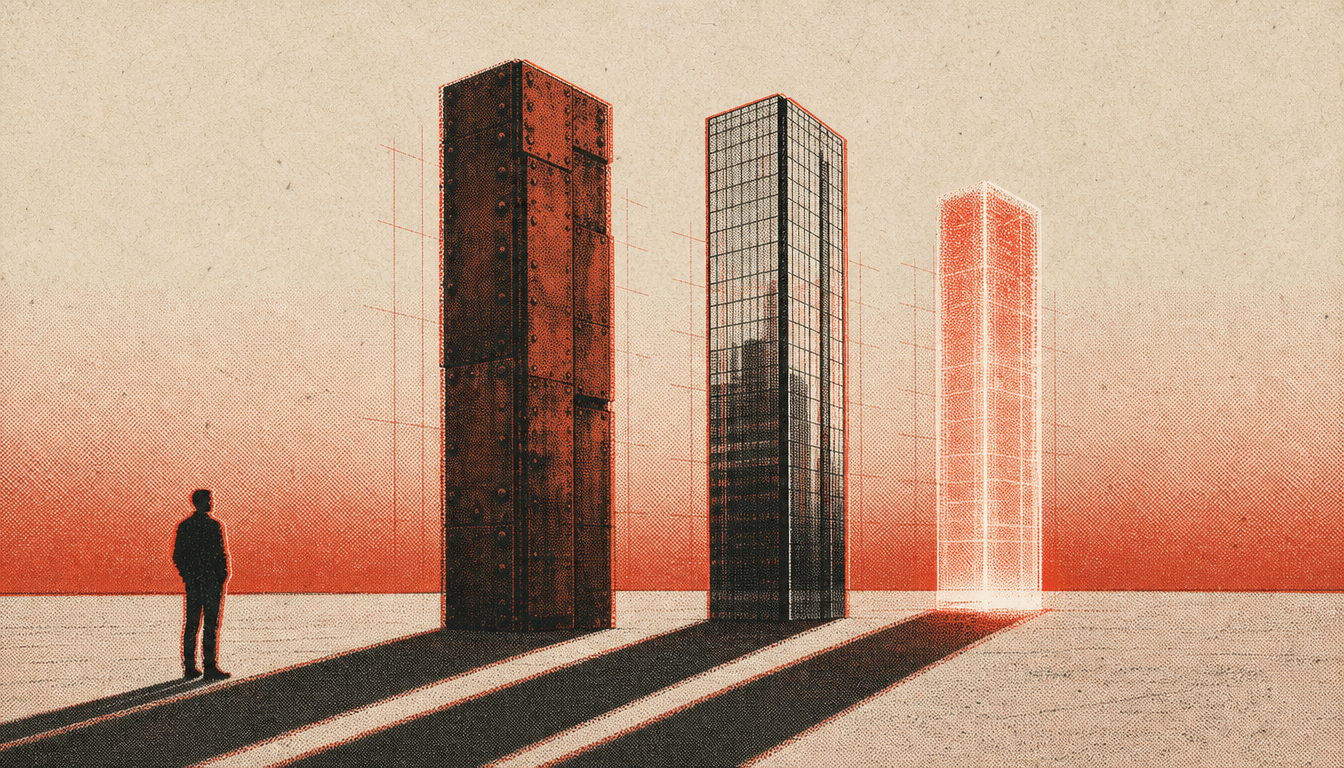
Walk into any gym, bookstore, or podcast feed today, and you will find men actively constructing identities rather than inheriting them. The script is gone. In its place is a marketplace of philosophies, aesthetics, and frameworks competing for attention. Some men gravitate toward Stoic philosophy. Others toward entrepreneurship culture, traditionalist revival, fitness subcultures, or therapeutic self-inquiry. Most blend several.
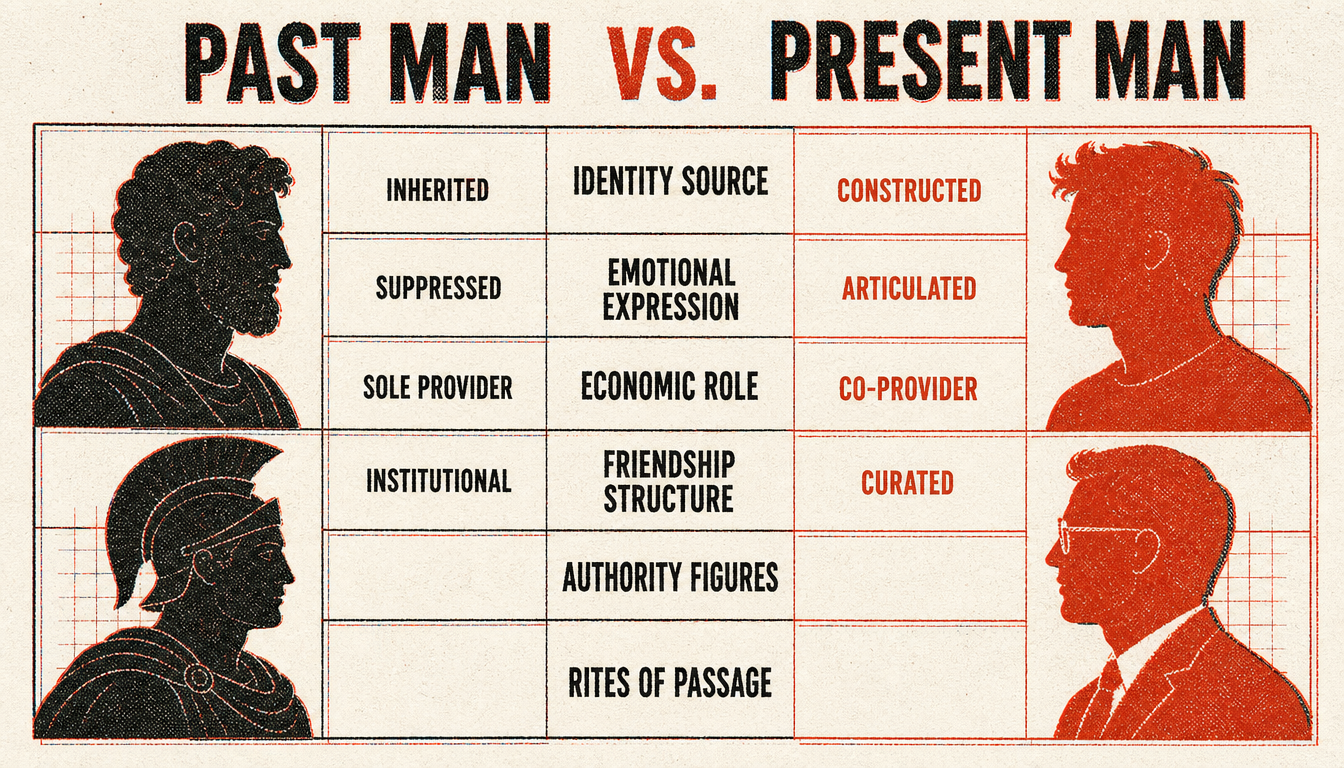
This shift is not superficial. It represents a structural change in how masculine identity is formed and validated.
Dimension | Past | Present | Direction |
|---|---|---|---|
Identity source | Inherited from community | Constructed by individual | From outside to inside |
Emotional expression | Suppressed, stoic in caricature | Encouraged, sometimes performative | From silence to articulation |
Economic role | Sole provider | Co-provider or independent earner | From fixed to fluid |
Friendship structure | Institutional, geographic | Chosen, often digital | From given to curated |
Physical standards | Functional toughness | Aesthetic and performance optimization | From utility to image |
Authority figures | Father, clergy, employer | Authors, podcasters, online mentors | From local to distributed |
Rites of passage | Marriage, military, first job | Largely absent or self-designed | From shared to invented |
The present moment offers freedom the past did not. A man can choose his trade, his philosophy, his geography, his partner, and his lifestyle with fewer external constraints than at any prior point in history. He can express vulnerability without losing standing among thoughtful peers. He can pursue creative or caregiving work that earlier generations would have considered unmanly.
That freedom comes with a tax. Without a default script, every decision becomes deliberate. Without inherited rites of passage, men often arrive at thirty-five still unsure whether they have become adults. Without geographically rooted male communities, friendship requires effort that previous generations did not have to budget for. The result is a generation of men who are objectively better informed about self-development than any before them, yet often less anchored.
Why the Shift Happened
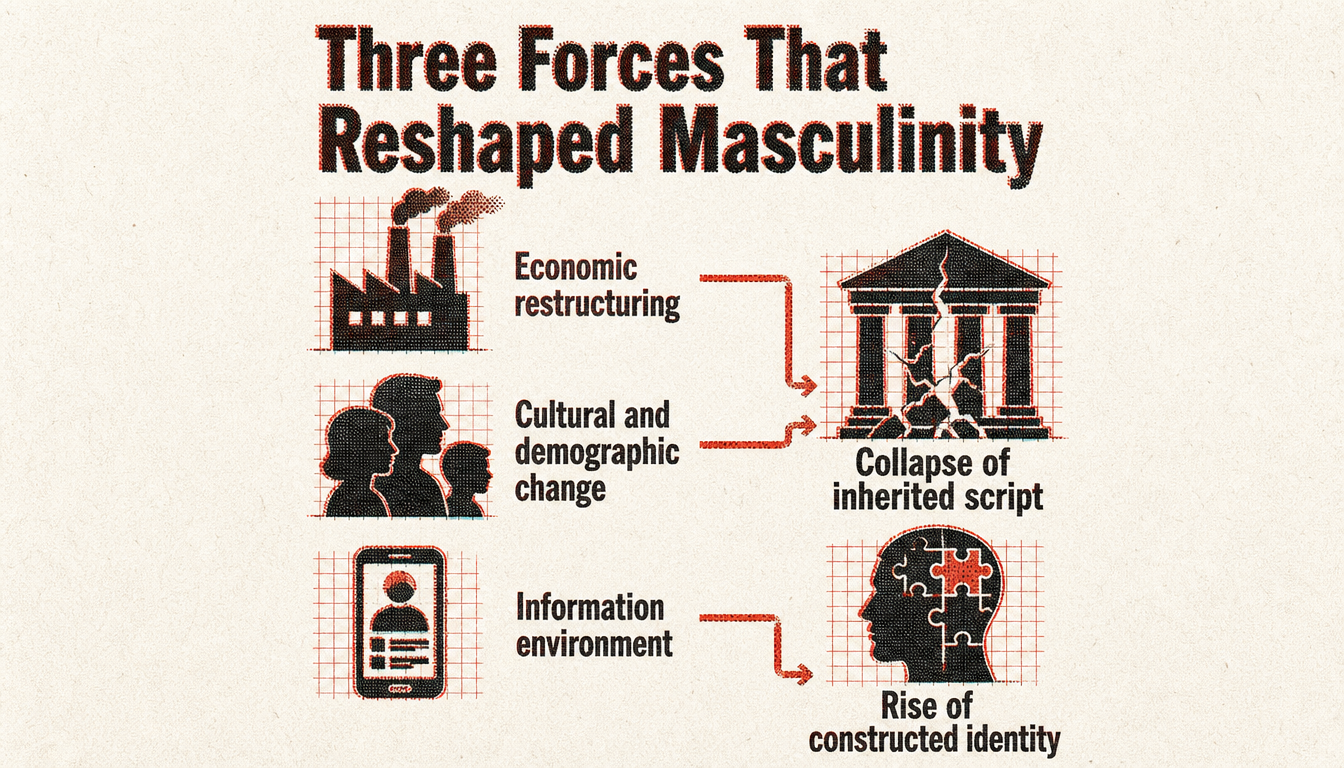
Three forces drove the transformation, and understanding them clarifies why returning to the old model is neither possible nor desirable, while also explaining why the new landscape feels disorienting.
Economic restructuring
The single-income provider role was an artifact of a specific economy: industrial manufacturing, stable corporate employment, affordable housing relative to wages, and demographic conditions that supported early marriage and family formation. As manufacturing declined in developed economies, as housing costs outpaced wages, and as the knowledge economy rewarded credentials over physical labor, the economic foundation of traditional masculinity eroded. A man can no longer assume that hard work and loyalty will produce the household his grandfather built. He must compete in a winner-takes-most economy where personal branding, technical skills, and adaptability matter more than tenure.
Cultural and demographic change
The entry of women into higher education and the workforce in numbers that now exceed men in many fields changed the partnership equation. Marriage is no longer a transaction in which a man trades provision for domestic support. It is, ideally, a partnership of equals. That requires a different masculine skill set: communication, emotional regulation, shared decision-making, domestic competence. Men who were raised by fathers operating under the old model often lack direct examples of how to do this well.
Simultaneously, urbanization scattered extended families, secularization weakened religious community, and the decline of fraternal organizations and union halls removed the male-only spaces where intergenerational transmission of masculine norms used to happen.
The information environment
The internet replaced the father, the priest, and the foreman as the primary source of guidance for young men. This democratized access to ideas that earlier generations could only encounter through scarce books or rare mentors. It also flooded the zone with grifters, ideologues, and algorithmically amplified extremes. A nineteen-year-old searching for direction now faces a feed engineered for engagement, not formation. The signal-to-noise ratio is poor, and the men who emerge well-formed from this environment tend to be those who actively curate their inputs rather than passively consume them.
Where Modern Masculinity Is Heading
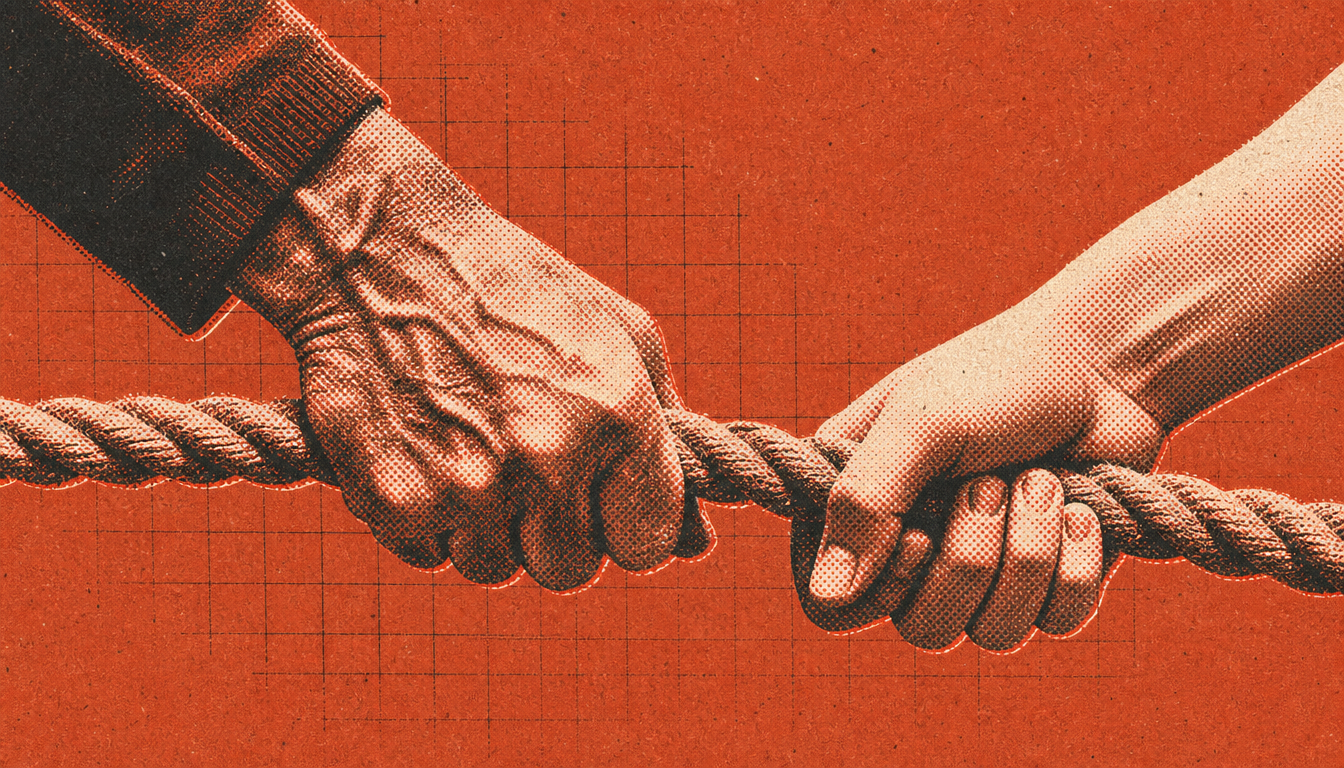
The transition is not finished. Predictions are uncertain by nature, but the trajectories are visible enough to plan around.
Horizon | Likely development | Confidence |
|---|---|---|
Short term | Continued fragmentation of masculine archetypes; growth of philosophy-based and discipline-based subcultures as a reaction to algorithmic noise | High |
Short term | Increased male loneliness as a recognized public concern, with grassroots responses outpacing institutional ones | High |
Medium term | Emergence of new, deliberately designed rites of passage and male mentorship structures, often outside traditional institutions | Medium |
Medium term | A return to embodied, physical, in-person practices as a counterweight to digital saturation | Medium |
Long term | Integration of older virtue traditions (Stoic, classical, religious) with contemporary psychology into more stable frameworks | Medium |
Long term | A maturation of the conversation beyond the current polarization between traditionalist and progressive camps | Lower |
The men who will navigate this well are not those who retreat into nostalgia or those who chase every new identity on offer. They are the ones who treat the absence of a default script as an invitation to build something more durable than any inherited role could have been.
The return of philosophy
The renewed interest in Stoic thought among men under forty is not a fashion. It is a symptom. When external scripts collapse, internal frameworks become necessary. Stoicism, virtue ethics, and similar traditions offer something the self-help market cannot: a coherent account of what a good life looks like, tested over centuries, that does not depend on circumstances a man cannot control. Expect this current to deepen rather than fade.
The premium on presence
As more interaction moves online, the men who can hold a room, look another person in the eye, sit with discomfort, and speak with calm authority will become disproportionately valuable, in work, in love, in friendship. Social presence is becoming a scarce skill precisely because it cannot be faked through a screen.
What to Build Now
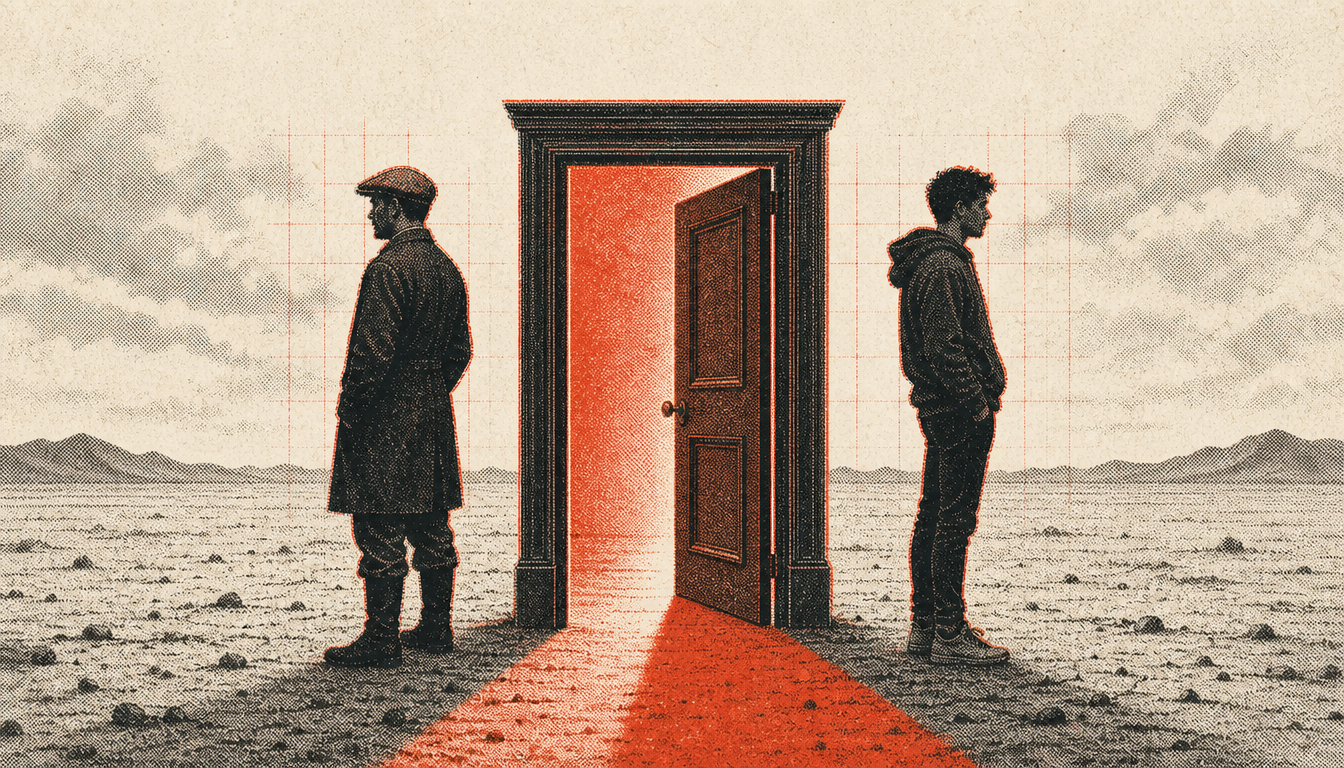
The point of this analysis is not commentary. It is preparation. The men who use the current disorientation as raw material will look, in twenty years, like the ones who saw what was happening and acted.
Short-term actions
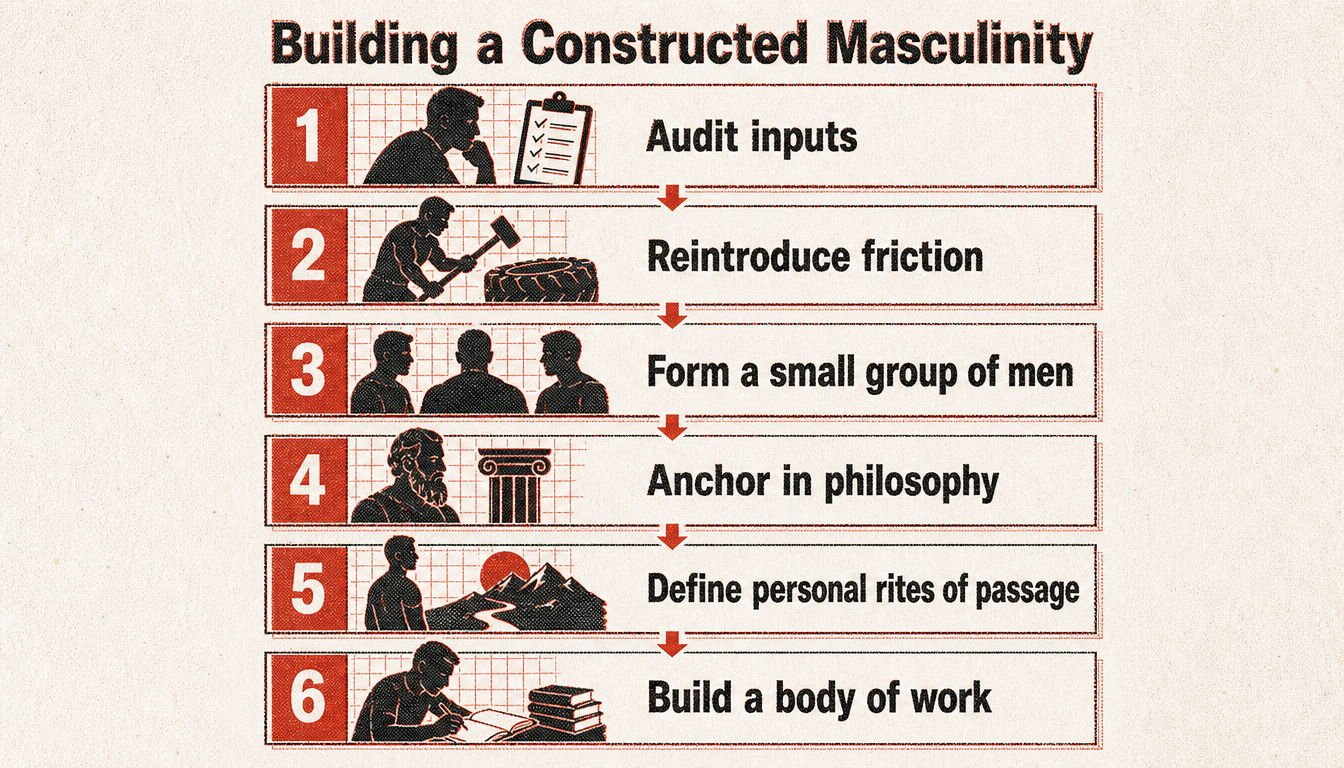
Audit your inputs. List the five voices, in any medium, that most shape how you think about being a man. If any of them prioritize engagement over your formation, cut them. Replace them with sources that have stood up over decades.
Reintroduce friction. The old model demanded physical and mental discomfort as a matter of course. Recreate it deliberately: cold exposure, hard training, long walks without headphones, conversations you have been avoiding.
Find or form a small group of men. Three to six people you meet with regularly, in person where possible, with a structure that requires honesty rather than mere socializing.
Pick a philosophical anchor and read its primary texts. Not summaries. Not influencer interpretations. The actual texts, slowly, with notes.
Long-term preparation
Define your own rites of passage. If the culture will not mark your transitions, mark them yourself. A first apprenticeship, the decision to commit to a partner, the birth of a child, the burying of a parent, treat these as the formal thresholds they are.
Build a body of work. Whether it is a craft, a business, a written record, or a family, choose something that will outlast the next decade of cultural turbulence and put consistent effort into it.
Develop intergenerational relationships in both directions. Find men twenty years older than you and learn from them. Find men twenty years younger and teach them. The transmission belt has broken; rebuild it on your section of the line.
Treat character as infrastructure. Courage, temperance, justice, practical wisdom: these are not abstractions. They are the load-bearing walls of any life worth building. Train them the way you train your body.
The Transition Point
The shift from inherited to constructed masculinity is irreversible. The economic, cultural, and technological forces that drove it are not going to retreat. Men who waste energy mourning the old model or performing a costume version of it will lose ground to those who accept the new terrain and learn to operate on it.
What the present moment offers, beneath the noise, is a rare opportunity. The absence of a default script means a man can build a life of his own design, anchored in philosophy he has actually examined, defined by relationships he has actually chosen, and measured by standards he has actually thought through. That is harder than inheriting a role. It is also, when done well, considerably more solid.
The men of the past were given their masculinity. The men of the present must earn it. The men of the next generation will inherit whatever frameworks we build now. This is the transition point, and what you do with it will outlast you.